http://e-info.org.tw/node/117628
十大死因之首 國外研究:空污恐增肺癌死亡風險
文字大小
38 2 Share1

本報2016年8月10日綜合外電報導,姜唯編譯;蔡麗伶審校
空氣污染影響健康的證據再添一樁。美國醫學中心與英國皇家醫學院的研究以及報告指出,暴露於高度污染的空氣,與肺癌死亡風險有正相關。無獨有偶,衛福部近日公布最新國人十大死因,癌症連續34年蟬聯冠軍,其中又以肺癌最多。
國外最新研究顯示,空氣污染可能縮短肺癌患者的壽命。而減少接觸空氣污染可能可以增加病患存活機會。
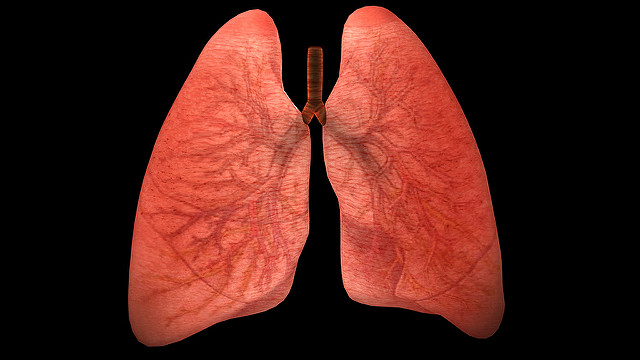
空氣污染影響身體健康。圖爲人類肺部示意圖。圖片來源:Wesley McCormick (CC BY-NC-ND 2.0)。
《胸腔》期刊:肺癌初期患者因空氣污染過早死亡的風險最大
蘋果日報報導,衛福部5日公布國人最新十大死因,癌症連34年居首,創史上新高,又以死於肺癌者最多。同時,發表於《胸腔》期刊的新研究顯示,肺癌初期患者過早死亡的風險最大,尤其是肺腺癌患者。肺腺癌是最常見的非小細胞肺癌,占了80%的比例。
這項研究檢視1988年至2009年間加州被診斷出肺癌的35萬2000人,截至2011年末的健康狀況。其中初期病患平均活了3.6年,但是暴露於高濃度懸浮粒子的病患平均只活了2.4年。
整體而言,暴露於二氧化氮讓肺癌初期患者的死亡風險增加了30%,大型懸浮微粒使死亡風險增加26%,小型懸浮微粒增加38%。初期病患五年後還存活的機會是30%,接觸高度空污者五年後還存活的機率是接觸空污程度最低者的50%。
研究團隊無法肯定空氣污染造成這些病患過早死亡,但表示研究結果在臨床上顯著,並主張減少接觸空氣污染可能可以增加病患存活機會。
英國皇家醫學院:交通和工廠排放的空氣污染增加心肺疾病的風險
 |
| 城市中因交通所造成的空氣污染。攝影:洪郁婷。圖片來源:本報資料照片。 |
根據今年皇家醫學院的報告,英國每年有4萬人因空氣污染而過早死亡。作者之一格里格(Jonathan Grigg)教授表示,證據明確顯示,交通和工廠排放的空氣污染增加心肺疾病的風險。
英國政府表示,身體健康的年輕人不太會受中度空氣污染影響,但接觸於高度空氣污染或是長時間接觸空氣污染可能產生嚴重後果,有心肺問題者尤其如此。
不過,劍橋大學腫瘤流行病學教授Paul Pharoah認為,從這項研究看來,二氧化氮、小型懸浮粒子和極小型懸浮粒子肺癌患者死亡機率之間的關係沒那麼密切。「或許有其相關性,但相關性不一定等於因果關係。」
【延伸閱讀】
【相關文章】
【參考資料】
Pollution may shorten lung cancer patients' lives, research shows
US study of people with early-stage disease adds to evicence about the health impact of airborne toxins

Air pollution may shorten the life of people who are suffering from lung cancer, researchers have found.
The findings, which add to growing evidence about the health impact of airborne toxins, show that those diagnosed with early-stage lung cancer are most at risk of an early death. That applies in particular to people with adenocarcinoma, the commonest form on non-small cell lung cancer, which accounts for 80% of cases of the disease.
The findings come from US medical research that examined the health outcomes until late 2011 of 352,000 people in California who were diagnosed with lung cancer between 1988 and 2009.
Those with early stage lung cancer survived for an average of 3.6 years, but that fell to 2.4 years for those who had been exposed to high levels of particulate matter.
Overall, for patients with early-stage disease, the risk of death from any cause was 30% greater for exposure to nitrogen dioxide, 26% for larger particulate matter and 38% higher for exposure to smaller particulate matter.
The chances of those diagnosed early being alive five years later was 30% for those exposed to the highest levels of air pollution compared with 50% among those who had suffered the least exposure, according to the findings, which are reported on Friday in the medical journal Thorax.
The team could not state conclusively that air pollution led to early death in such patients, but said the findings were clinically significant and suggested that reducing exposure to air pollution could improve someone’s chances of surviving the disease.
About 40,000 people a year in the UK die early as a result of air pollution, according to a report this year from the medical royal colleges, which represent hospital doctors and specialists in children’s health. Professor Jonathan Grigg, one of the co-authors, said the evidence was now clear that emissions from traffic and factories increased the risk of heart disease and lung conditions.
The government says that young people in good health are unlikely to suffer health harm from moderate air pollution, but that exposure to high levels or prolonged exposure can have more serious consequences, especially those with lung or heart problems.
Professor Michael Peake, an expert in respiratory medicine at Leicester University, said the life-shortening impact of air pollution the research revealed could undermine the benefits of campaigns to increase public awareness of lung cancer and promote earlier diagnosis.
“This work suggests that high levels of air pollution are likely to significantly reduce the impact of such efforts on the numbers of people who eventually die of lung cancer, even if detected early, Peake said. “It adds significant weight to the urgent need for more strenuous efforts to reduce air pollution.”
Paul Pharoah, however, a professor of cancer epidemiology at Cambridge University, said the study had found only a modest association between the amount of exposure to nitrogen dioxide, small particulate matter and very small particulate matter and the risk of lung cancer patients dying. “The observed association is quite clear, but association does not necessarily mean causation,” he said.


沒有留言:
張貼留言