http://e-info.org.tw/node/117680
小心你的防曬油 成了把珊瑚變「殭屍」的元凶
文字大小
1048 1 Share1
本報2016年8月12日綜合外電報導,姜唯編譯;蔡麗伶審校
珊瑚產卵的壯觀景象,吸引不少遊客爭睹,但科學家卻觀察到,觀光業越發達的地方,珊瑚繁殖率竟越低!科學家在佛羅里達礁島群等地發現繁殖能力為零的「殭屍珊瑚」,這些珊瑚看似健康,卻不會產卵。有研究指出,防曬油常見的成分「氧苯酮」,是導致珊瑚變成殭屍的主因之一。這個發現也讓珊瑚白化的恢復希望更加渺茫。
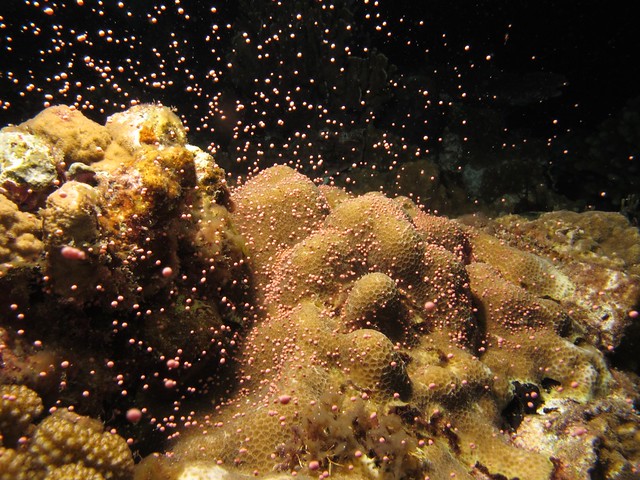
於珊瑚繁殖季產卵的「健康」珊瑚。攝影:陳孝麟。圖片來源:台灣珊瑚礁學會。
全球海洋正經歷史上最嚴重的珊瑚白化潮,氣候變遷和聖嬰現象讓海水溫度創下新高。過度溫暖的海水導致珊瑚失去提供養分的共生藻類。大堡礁93%的珊瑚受影響,近1/4的珊瑚死亡。珊瑚礁是生物多樣性熱點,也是魚類的重要棲地,更是超過10億人口的重要營養來源。
今年夏威夷國際珊瑚礁研討會發表的一篇研究,觀察加勒比海地區327個珊瑚礁生態,評量看似健康的軸孔珊瑚的繁殖能力。在部分地區,包括佛羅里達礁島群,軸孔珊瑚不產出卵子和精子,繁殖能力為零。
科學家認為,這表示這些軸孔珊瑚形同殭屍,最終仍會死亡,稱之為「殭屍珊瑚」。不過,聖克羅伊島附近的兩處珊瑚繁殖率高達100%。科學家表示,大致上觀光業越發達的地方,繁殖率越低。
 |
| 立即採取行動!做法很簡單,改穿防曬衣或是不要用會傷害珊瑚的防曬油。圖片來源:Amir Illusion(CC BY 2.0)。 |
此外科學家也發現,夏威夷、佛羅里達和美屬維京群島海水中含有防曬油中常見的紫外線過濾成分氧苯酮。這種化學物質不但會殺死珊瑚,也會破壞成熟珊瑚的DNA,甚至造成珊瑚幼蟲畸形而無法正常生長。
另一個較早的研究顯示,許多珊瑚礁觀光勝地海水含有高濃度的氧苯酮。科學家指出,氧苯酮的濃度在漲潮時最高,可能是氣溶膠型態的防曬油所致。人們使用噴霧狀的防曬油時,大部分會落在沙灘上,漲潮時被帶入海水中。
研究也顯示,個人保養品的防腐劑、紫外線吸收劑和塑膠微粒對珊瑚、海膽胚胎、蝦幼體和魚幼體來說都有毒。科學家表示,人們必須立即採取行動。做法很簡單,改穿防曬衣或是不要用會傷害珊瑚的防曬油。

'Zombie corals' pose new threat to world's reefs
Scientists discover corals that look healthy but cannot reproduce, dashing hopes such reefs could repopulate bleached areas

Zombie corals, which look healthy but cannot reproduce, have been discovered by researchers, dashing hopes that such reefs could repopulate areas destroyed by bleaching.
Scientists have also found that a common ingredient in sunscreen is killing and mutating corals in tourist spots.
The new evidence of harm to corals comes as the most widespread coral bleaching event in recorded history is sweeping the world’s oceans. Water temperatures have been driven up by a run of record-breaking hot years, caused by climate change and the El Niño phenomenon. Very warm water causes corals to lose the algae that normally live inside them and help them feed.
Corals in every major reef region have already experienced severe bleaching. About 93% of the reefs on Australia’s Great Barrier Reef have been affected, andalmost a quarter of the reef is now dead. Corals are hotspots of biodiversity and crucial nurseries for fish, upon which 1 billion people rely for nourishment.
The new research, presented at the International Coral Reef Symposium in Hawaii, sampled 327 coral colonies across the Caribbean to assess the reproductive ability of apparently healthy elkhorn coral, which is a threatened species.
In some places, including two sites in the Florida Keys, the coral had no eggs or sperm and therefore zero ability to reproduce. The scientists said this indicates these elkhorn corals are are essentially walking dead and will eventually die out, dubbing them “zombie corals”.
“It’s pretty discouraging,” said John Fauth, at the University of Central Florida and one of the team. “This is not good news.”
However, two samples from the more remote St Croix area found the coral had 100% reproduction ability. “Basically the places with the heaviest tourism had the most severe damage,” Fauth said.
Another study Fauth was part of found that oxybenzone, a common UV-filtering compound in sunscreen, is common in Hawaii, Florida and the US Virgin Islands.
The chemical kills coral but also causes DNA damage in adult coral and deforms the larval stage, making normal development unlikely. Anearlier study showed that the highest concentrations of oxybenzone were found on the reefs most popular with tourists.
The new work found that concentrations of oxybenzone peak at the high tide. “We think aerosol sunscreen is to blame,” said Fauth. When someone sprays sunscreen on, much of it falls on the beach, he said, so the high tide comes collects the lost spray and washes it back out to sea.
The research also showed the toxic effects to coral, sea urchin embryos, shrimp larvae, and fish larvae exposed to preservatives, UV absorbers and microbeads from personal care products.
“We have to act now,” Fauth said. “It is simple things like not using chemicals that harm our coral. Wear rash guards or go without sunscreen during dives. And it is making a serious commitment to conservation and management of our reefs. We want to do everything we can to ensure that the underwater beauty we see today is around for generations to come.”


沒有留言:
張貼留言