http://e-info.org.tw/node/117515
極圈35°C熱爆釀炭疽疫情 俄當局:疑氣候變遷所致
文字大小
682 1 Share1

本報2016年8月4日綜合外電報導,姜唯編譯;蔡麗伶審校
俄羅斯北極圈地區爆發炭疽疫情,專家研判是氣候異常暖化使炭疽桿菌的孢子釋出所致。繼麋鹿感染炭疽病毒大量死亡後,俄羅斯北部薩列哈爾德(Salekhard)鎮目前有72名遊牧民住院,包括41名兒童,其中一名12歲男童已喪生。目前確診病例包括五位成人和另外二名兒童。
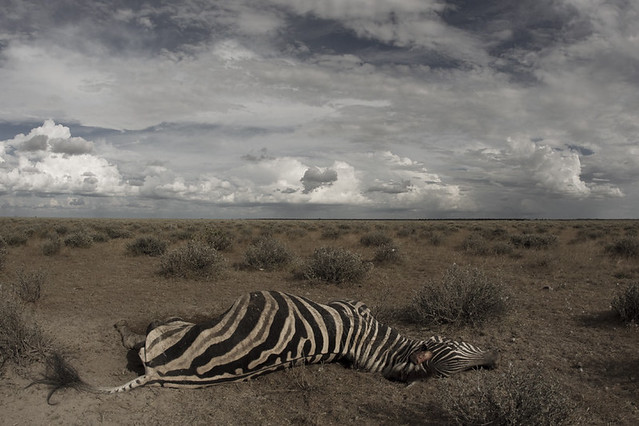
因炭疽熱而死的動物。圖片來源:Yathin(CC BY-NC-ND 2.0)。
炭疽熱在俄羅斯又稱為「西伯利亞瘟疫」,上一次出現是在1941年。此次炭疽熱造成2300頭麋鹿死亡,至少63人從疫情爆發地點周圍的隔離區撤離。
有關當局認為此次疫情爆發和氣候變遷有關。過去一個月間,當地經歷異常的高溫,最高達35°C。
世界自然基金會(WWF)俄國分會氣候與能源計劃主任寇可林(Alexei Kokorin)指出,炭疽桿菌的孢子可以在冷凍的人類和動物屍體中存活數百年,解凍時便會從中釋出。
「如此異常高溫在亞馬爾半島非常罕見,很可能是氣候變遷的表現。」寇可林說。
俄羅斯的平均氣溫在過去10年上升了0.43°C,極圈地區受溫度影響更加明顯。氣候暖化使覆蓋俄羅斯大部分地區的永凍土融化,包括墓地和埋有動物屍體的土壤。融化的永凍土也加重河床侵蝕,而河床正是遊牧民族族人遺體常見的埋葬處:「遺體往往埋得不深,因為永凍土很難深掘。」寇可林說。
根據習俗,涅涅茨族(Nenets)常將遺體棺木放置在空曠處。
從解凍人類和動物屍體中釋出的炭疽桿菌能透過地下水傳染給人。薩列哈爾德鎮死亡的男孩就是死於腸型感染的炭疽病,典型症狀是發燒、胃痛、腹瀉和嘔吐。
其他報導指出,當地一處墓地和受感染的鹿肉可能是最初的感染源。
2014年亞馬爾半島上出現三個異常的坑洞。科學家認為這也是氣候變遷作祟。永凍土融化可能使地底下的天然氣爆炸,形成巨大的天坑。
今年夏天在亞馬爾半島旁另一座島嶼上,科學家拍下草地上下彈跳的畫面。科學家認為這個現象可能是地面下甲烷和二氧化碳氣體所造成。
【相關文章】
【參考資料】
Anthrax outbreak triggered by climate change kills boy in Arctic Circle
Seventy-two nomadic herders, including 41 children, were hospitalised in far north Russia after the region began experiencing abnormally high temperatures

A 12-year-old boy in the far north of Russia has died in an outbreak of anthrax that experts believe was triggered when unusually warm weather caused the release of the bacteria.
The boy was one of 72 nomadic herders, including 41 children, hospitalised in the town of Salekhard in the Arctic Circle, after reindeer began dying en masse from anthrax.
Five adults and two other children have been diagnosed with the disease, which is known as “Siberian plague” in Russian and was last seen in the region in 1941.
More than 2,300 reindeer have died, and at least 63 people have been evacuated from a quarantine area around the site of the outbreak.
“We literally fought for the life of each person, but the infection showed its cunning,”the Yamal governor, Dmitry Kobylkin, told the Interfax news agency. “It returned after 75 years and took the life of a child.”
The tabloid LifeNews reported that the boy’s grandmother died of anthrax at a nomad camp last week.
Authorities said the outbreak was linked to climate change. For the past month, the region has been experiencing abnormally high temperatures that have reached 95F.
Anthrax spores can survive in frozen human and animal remains for hundreds of years, waiting to be released by a thaw, according to Alexei Kokorin, head of WWF Russia’s climate and energy programme.
“Such anomalous heat is rare for Yamal, and that’s probably a manifestation of climate change,” he said.
Average temperatures in Russia have increased by 0.43C in the past 10 years, but the rise has been more pronounced in areas of the far north. The warmer climate has begun thawing the permafrost soil that covers much of Russia, including cemeteries and animal burial grounds. Thawing permafrost has also led to greater erosion of river banks where nomads often buried their dead, Kokorin said.
“They didn’t bury deep because it’s hard to dig deep in permafrost,” he explained.
According to custom, the Nenets tribe often inters its dead in a wooden coffin on open ground.
The disease from thawing human and animal remains can get into groundwater that people then drink. The boy in Salekhard died from the intestinal form of the disease, which typically results in fever, stomach pain, diarrhea and vomiting.
Other reports said a local cemetery was suspected, or infected venison.
Three unusual sinkholes were discovered on the Yamal peninsula in 2014, a phenomenon that many scientists also tied to climate change. Thawing permafrost could have allowed gas in the ground to explode, they said.
This summer, researchers have filmed grassy ground on an island off the Yamal peninsula that appeared to bounce under their feet. The phenomenon was likely caused by “bubbles” of methane and carbon dioxide, they said.


沒有留言:
張貼留言