http://e-info.org.tw/node/118388

人類文明啟動第六次大滅絕 研究:將首度重創海洋
文字大小
462 3 Share1
本報2016年9月19日綜合外電報導,姜唯編譯;蔡麗伶審校
一份發表於《科學》期刊的研究顯示,人類文明正啟動化石紀錄上最大規模的海洋大滅絕,其獵捕和殺害大型物種對海洋生態系統造成的後果將延續數百萬年。
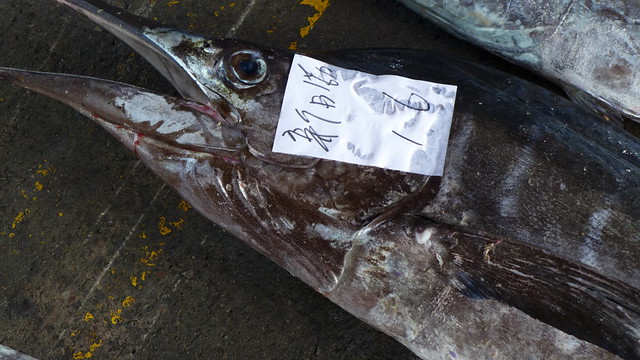
資料顯示,人類偏好捕撈海洋大型物種。攝影:陳文姿。
大白鯊、藍鯨瀕危 恐賠上整個生態系
數百萬年前的五次大滅絕都沒有海洋物種減損的規律性,或是小型物種減損較嚴重。但今日的第六次大滅絕不同,人類偏好捕撈大型物種勝過小型物種,導致大白鯊、藍鯨和南方黑鮪等大型物種瀕危,為全世界海洋生態帶來災難性的影響。
「如果大型物種消失的現象持續,未來海洋將缺少大型物種。許多大型物種在生態系統中扮演關鍵性的角色,一旦滅絕將造成生態連鎖效應,影響生態系統的結構和功能。」史丹佛大學地球科學系副教授沛恩(Jonathan Payne)說。
大型物種只要稍微減損,後果就很嚴重。研究作者警告,就算物種減損程度遠低於前幾次大滅絕,大型物種消失對生態系統的影響可延續數百萬年。
沛恩說,海洋失去大型物種會在生態系統產生連鎖效應,像珊瑚礁生態系失去大型掠食動物海螺,很可能是棘冠海星大爆發的原因。連鎖效應也會波及人類,依賴珊瑚礁觀光業維生的沿海社群,會受珊瑚礁生態系統崩壞影響;鮪魚和鱈魚若滅絕,也會剝奪人類重要的蛋白質來源。
上千組資料比對 今日大型物種減損是首例
為了瞭解目前物種減損狀況和前幾次大滅絕的差異,沛恩和研究團隊分析了過去500年間2497組海洋脊椎和軟體動物,與更久遠之前的資料做比較。
他們發現,過去大滅絕的物種減損與體型無關,或是體型較小的物種減損較嚴重,化石紀錄中不曾出現像今日這麼嚴重的大型物種減損。
「我們發現現今海洋中,體型和滅絕危機之間的相關性相當高。」沛恩說。
「類似的現象一再發生。人類進入新的生態系統,最大型的物種最先消失。海洋系統能倖存至今,是因為直到最近,人類才有大規模深海捕魚的技術。」共同作者漢默(Noel Heim)說。
另一位作者麥考利(Douglas McCauley)說,體型越大的動物在海洋中需要更大的活動空間,因此各國政府紛紛設立大型海洋保護區,為大型物種存續帶來一線曙光。
「過去海洋保護區很小,大多和高爾夫球場差不多。不過最近五年,全世界開始積極設立超大型海洋保護區。歐巴馬最近設立全世界最大的帕帕哈瑙莫夸基亞國家海洋保護區,超過百萬平方公里。這樣規模的保護區的確能保護瀕危的大型物種。」

Humanity driving 'unprecedented' marine extinction
Report comparing past mass extinction events warns that hunting and killing of ocean’s largest species will disrupt ecosystems for millions of years

Humanity is driving an unprecedented extinction of sealife unlike any in the fossil record, hunting and killing larger species in a way that will disrupt ocean ecosystems for millions of years, scientists have found.
A new analysis of the five mass extinction events millions of years ago discovered there was either no pattern to which marine species were lost, or smaller species were the ones that disappeared.
But today’s “sixth extinction” is unique in the way that the largest species, such as great white sharks, blue whales and southern bluefin tuna, are being pushed to the brink, due to humans’ tendency to fish for larger species more often than smaller ones.
The consequences, according to a study published in the journal Science on Wednesday, are devastating for the ecology of the world’s oceans.
“If this pattern goes unchecked, the future oceans would lack many of the largest species in today’s oceans,” said Jonathan Payne, associate professor and chair of geological sciences at Stanford University. “Many large species play critical roles in ecosystems and so their extinctions could lead to ecological cascades that would influence the structure and function of future ecosystems beyond the simple fact of losing those species.”
The danger is disproportionate to the percentage of threatened species, with the authors warning the loss of giants would “disrupt ecosystems for millions of years even at levels of taxonomic loss far below those of previous mass extinctions”.
The loss of larger species in the oceans could have knock-on effects on ecosystems, Payne said, citing the loss of very large predatory seasnails (Triton) from coral reefs, which appears to be one of the reasons behind the explosive growth in numbers of crown of thorns starfish, which eat coral.
Humans would be affected by such trends too, he said, as communities rely on coral reefs to attract tourism. He also pointed to the examples of tuna and cod, whose extinction would deprive people of an important source of income and protein.
To see how the current loss of species compared to previous extinctions, Payne and his team analysed a database of 2,497 groups of marine vertebrate and mollusc over the past 500 years, and compared it to the ancient past.
They found no precedent in the fossil record for today’s trend towards killing off larger-bodied species, with previous mass extinctions marked by either no association with body size or an association with smaller species.
“The link that we found between body size and extinction threat in the modern oceans is quite strong,” Payne told the Guardian.
Co-author Noel Heim, also at Stanford, said: “We see this over and over again. Humans enter into a new ecosystem, and the largest animals are killed off first. Marine systems have been spared up to now, because until relatively recently, humans were restricted to coastal areas and didn’t have the technology to fish in the deep ocean on an industrial scale.”
Fellow author Douglas McCauley said large body size was often linked with the need for larger ocean spaces to range in, so an increasing trend for governments to create very large marine protected areas could hold some hope for species.
“Historically marine protected areas have been small boutique affairs - more like the size of golf courses. In the past five years, however, the world has begun aggressively setting up very large marine protected areas.
“Recently Obama created the world’s largest protected area in Papahānaumokuākea, a protected area just over a million square kilometres in size. This is really good news as parks of this size will indeed provide meaningful protection for large vulnerable animals we highlight as being at risk.”


沒有留言:
張貼留言