http://cordis.europa.eu/news/rcn/124906_en.html
Modern station designs for protection against harmful pollutants
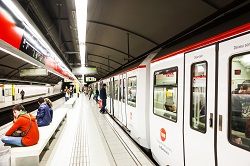
© Shutterstock
The Seventh Framework Programme-funded HEXACOMM project, in collaboration with the European Commission’s LIFE programme-funded IMPROVE project, has published the results of a study investigating the air quality in underground metro stations and how station design could limit travellers’ exposure to potentially harmful pollutants.
Underground trains are amongst the widely used public transport systems in the world and the millions of commuters and tourists who use them daily are at risk of being exposed to pollutants such as particulate matter (PM) which has been linked to health problems including heart and respiratory diseases. Potential sources of these particles in metro systems include the wear of brakes, wheels and rails, as well as outdoor air that enters stations through ventilation systems and entrances.
Experimentation on the Barcelona metro
The two projects identified the concentration, chemical composition and sources of fine particle matter (PM2.5) on the Barcelona metro system. During two seasonal periods (warm – April to July 2013 and cold – October 2013 to March 2014), high volume samplers were placed on the platforms of four stations to collect PM2.5.
Each location chosen represented a specific station design. Three of the chosen locations for the study were older stations, designed with one or two rail tracks, with or without a dividing wall between tracks. The fourth station chosen had a modern design, with safety-conscious sliding doors across the platform edges, separating them from the tunnel. The research team also measured PM2.5 in outdoor air at a suburban Barcelona station for comparative purposes.
An analysis of the results highlighted that concentrations of PM2.5 were variable at the different stations and during the two different seasons. Higher concentrations of PM2.5 were recorded at all stations during the colder season. This is likely due to increased air ventilation during the warmer period that results in an increased dispersion of PM2.5.
Researchers also discovered that concentrations of PM2.5 were lowest at the station with the most modern design, compared to the older stations. They argue that this is likely due to the sliding door, which keeps tunnel air separate from the platform. Better ventilation in the new station, alongside the fact that the station was visited by fewer trains, also likely contributed to the better air quality.
The two projects also examined the chemical composition of the received samples. The largest component of PM2.5 (28-65 % of the total) was haematite, generated mainly by the abrasion of rail tracks, wheels and brake pads. Haematite concentration was 60 % lower in the modern station, where the tunnel was separated from the platform. Based on this, the researchers suggest that the haematite found on the metro platforms originate from the tunnel.
It was also found that PM2.5 concentrations were 1.4 to 5.4 times higher in all metro stations compared with outdoor air. Additionally, concentrations of some trace metals, such as barium, copper, manganese and zinc were higher in metro stations than in outdoor air. Between the four test stations the lowest trace metal concentrations was found in the modern station.
Building modern stations for better protection
The research team concluded that to better protect travellers from potentially harmful pollutants, rapid transit planners should take better ventilation into account, as well as overall station design. They particularly emphasise the installation of screen doors on platforms as reducing exposure to PM2.5, and they also have the additional value of protecting passengers from falling or jumping into the path of oncoming trains.
The HEXACOMM project aims as one of its core research objectives to determine the human exposure to particulate matter in modern microenvironments. It is due to finish at the end of 2016 and has received approximately EUR 4 000 000 in EU funding.
The LIFE programme-funded IMPROVE project is specifically focussing on the improvement of metro system indoor air quality.
For more information please see:
HEXACOMM project website
IMPROVE project website
Underground trains are amongst the widely used public transport systems in the world and the millions of commuters and tourists who use them daily are at risk of being exposed to pollutants such as particulate matter (PM) which has been linked to health problems including heart and respiratory diseases. Potential sources of these particles in metro systems include the wear of brakes, wheels and rails, as well as outdoor air that enters stations through ventilation systems and entrances.
Experimentation on the Barcelona metro
The two projects identified the concentration, chemical composition and sources of fine particle matter (PM2.5) on the Barcelona metro system. During two seasonal periods (warm – April to July 2013 and cold – October 2013 to March 2014), high volume samplers were placed on the platforms of four stations to collect PM2.5.
Each location chosen represented a specific station design. Three of the chosen locations for the study were older stations, designed with one or two rail tracks, with or without a dividing wall between tracks. The fourth station chosen had a modern design, with safety-conscious sliding doors across the platform edges, separating them from the tunnel. The research team also measured PM2.5 in outdoor air at a suburban Barcelona station for comparative purposes.
An analysis of the results highlighted that concentrations of PM2.5 were variable at the different stations and during the two different seasons. Higher concentrations of PM2.5 were recorded at all stations during the colder season. This is likely due to increased air ventilation during the warmer period that results in an increased dispersion of PM2.5.
Researchers also discovered that concentrations of PM2.5 were lowest at the station with the most modern design, compared to the older stations. They argue that this is likely due to the sliding door, which keeps tunnel air separate from the platform. Better ventilation in the new station, alongside the fact that the station was visited by fewer trains, also likely contributed to the better air quality.
The two projects also examined the chemical composition of the received samples. The largest component of PM2.5 (28-65 % of the total) was haematite, generated mainly by the abrasion of rail tracks, wheels and brake pads. Haematite concentration was 60 % lower in the modern station, where the tunnel was separated from the platform. Based on this, the researchers suggest that the haematite found on the metro platforms originate from the tunnel.
It was also found that PM2.5 concentrations were 1.4 to 5.4 times higher in all metro stations compared with outdoor air. Additionally, concentrations of some trace metals, such as barium, copper, manganese and zinc were higher in metro stations than in outdoor air. Between the four test stations the lowest trace metal concentrations was found in the modern station.
Building modern stations for better protection
The research team concluded that to better protect travellers from potentially harmful pollutants, rapid transit planners should take better ventilation into account, as well as overall station design. They particularly emphasise the installation of screen doors on platforms as reducing exposure to PM2.5, and they also have the additional value of protecting passengers from falling or jumping into the path of oncoming trains.
The HEXACOMM project aims as one of its core research objectives to determine the human exposure to particulate matter in modern microenvironments. It is due to finish at the end of 2016 and has received approximately EUR 4 000 000 in EU funding.
The LIFE programme-funded IMPROVE project is specifically focussing on the improvement of metro system indoor air quality.
For more information please see:
HEXACOMM project website
IMPROVE project website
Source: Based on information from the project


沒有留言:
張貼留言