http://e-info.org.tw/node/116418
海洋有「亮點」 全球這15處環境差 珊瑚發育反而好
文字大小
237 0 Share0
本報2016年6月20日綜合外電報導,姜唯編譯;蔡麗伶審校
科學家觀察到珊瑚礁克服過度捕撈等環境壓力、進而蓬勃生長的海中「亮點」,這些地方在種種不利環境條件之下,魚群數量卻超乎預期的多,也讓保育界燃起新希望。
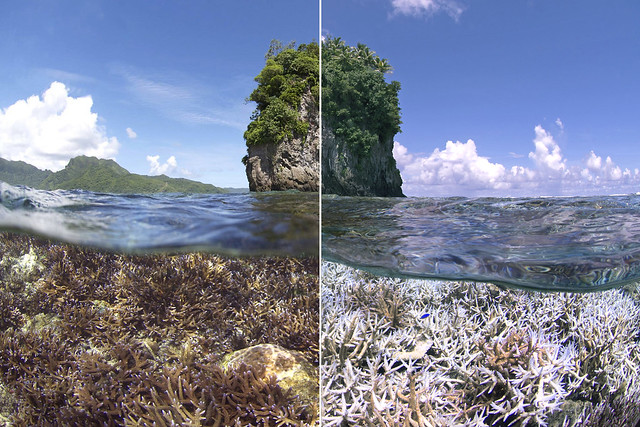
南太平洋島國薩摩亞的珊瑚礁,發生白化現象的前後對照。圖片來源:XL Catlin Seaview Survey。
研究人員在全球46個國家進行6000多項珊瑚礁調查,發現有15個地點,魚群出乎意料的多。這些「亮點」大部分位在太平洋,包括索羅門群島、印尼部分區域、巴布亞紐幾內亞和吉里巴斯。
但同時,科學家也發現珊瑚礁狀況不佳的「暗點」,有些甚至出現在偏遠、相對未受污染的地方。
研究指出:「這些亮點所在地往往有鮮明的社會文化特性,包括約定俗成的海洋資源運用方式、地方高度參與海洋資源管理、高度依賴海洋資源以及有利的環境條件,像是隱密的深海棲地。」
研究主持人Josh Cinner教授說:「『亮點』是指在人口壓力、貧窮、不利環境條件之下,魚群數量卻超乎預期的地點。不一定是未受污染的地方,而是面對壓力適應得特別好的地方。我們想知道為什麼這裡的珊瑚礁有過人的抗壓性,是否有秘方可以克服過度捕撈造成的劣化。」
研究也發現35個魚群少於預期的「暗點」。這些暗點遍佈世界各地,幾乎每個主要的海洋盆地都有,也有些共同的特性。一般而言,這些暗點多有密集的捕撈活動,而且很容易囤積保存漁獲。
Cinner說:「我們認為亮點提供了一些珊瑚礁保育的啟示,具體而言包括加強地方參與,讓地方社群保有所有權,人們因而可以發展出保育珊瑚礁魚群的創意作法。相對的,暗點則告訴我們必須要避免的開發和管理方式。」
這份研究共有34所大學和保育團體、39位科學家參與,發表於《自然》期刊。

'Bright spots' offer fresh hope for survival of coral reefs
Experts identify areas where coral reefs are flourishing against the odds despite overfishing and environmental pressure

Surprising “bright spots” where coral reefs are flourishing against the odds despite overfishing and environmental pressure have given new hope to conservationists.
Experts believe they could shine a light on better ways to protect embattled coral reefs affected by climate change, overfishing and pollution.
The same team found other “dark spots” that were not faring well - some of which included remote and relatively undisturbed locations.
In one of the largest studies of its kind, researchers conducted more than 6,000 reef surveys in 46 countries around the world.
They identified 15 locations where far more fish were colonising coral reefs than had been expected. Bright spots were typically found in the Pacific Ocean in places such as the Solomon Islands, parts of Indonesia, Papua New Guinea, and the island republic of Kiribati.
The report said: “Bright spots are characterised by strong sociocultural institutions such as customary taboos and marine tenure, high levels of local engagement in management, high dependence on marine resources, and beneficial environmental conditions such as deep-water refuges.”
Lead scientist Professor Josh Cinner, from the ARC Centre of Excellence for CoralReef Studies at James Cook University in Australia, said: “Given the widespread depletion of coral reef fisheries globally, we were really excited to find these bright spots that were doing much better than we anticipated.
“These ‘bright spots’ are reefs with more fish than expected based on their exposure to pressures like human population, poverty, and unfavourable environmental conditions.
“To be clear, bright spots are not necessarily pristine reefs, but rather reefs that have more fish than they should, given the pressures they face.
“We wanted to know why these reefs could ‘punch above their weight’ so to speak, and whether there are lessons we can learn about how to avoid the degradation often associated with overfishing.”
The researchers, who included a British team from the University of Lancaster, pointed out that the bright spots were not immune to human activity but had certain features in common.
These included strong local involvement in their management, local ownership rights, and traditional management practices.
A total of 35 “dark spots” were identified where fish stocks were in worse shape than expected.
They were globally distributed and found in every major ocean basin, and also had some defining characteristics. Generally they were subject to intensive netting activity and allowed easy access to freezers where fish could be stockpiled.
Cinner added: “We believe that the bright spots offer hope and some solutions that can be applied more broadly across the world’s coral reefs.
“Specifically, investments that foster local involvement and provide people with ownership rights can allow people to develop creative solutions that help defy expectations of reef fisheries depletion.
“Conversely, dark spots may highlight development or management pathways to avoid.”
A total of 39 scientists from 34 universities and conservation groups took part in the research, published in the journal Nature.


沒有留言:
張貼留言