http://e-info.org.tw/node/116846
水陸兩棲會吃蛇 東南亞發現新種巨型蜈蚣
文字大小
484 1 Share1

本報2016年7月5日綜合外電報導,姜唯編譯;蔡麗伶審校
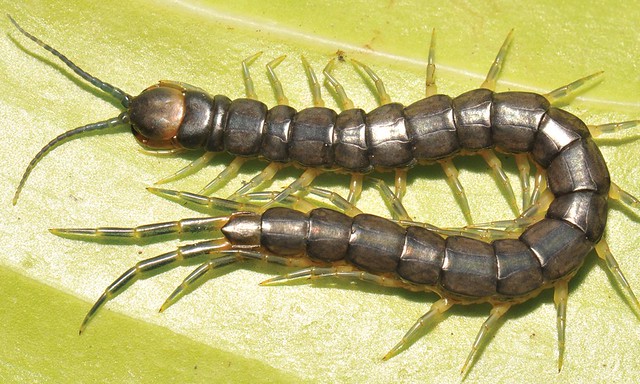
科學家發現全世界已知唯一的水陸兩棲蜈蚣,這種蜈蚣長達20公分(近8吋),若被咬到會感到劇痛。
轉述科學家貝卡羅尼的觀察,新發現的蜈蚣顏色是可怕的黑中帶綠。圖片來源:Zoo Keys
兩棲蜈蚣學名「Scolopendra cataracta」來自拉丁文的「瀑布」,曾出沒於寮國、泰國和越南,昆蟲學家貝卡羅尼(George Beccaloni)2001年在泰國度蜜月時發現後,直到近期才完整描述,發表於線上期刊《ZooKeys》。
「不管走到哪裡,我總會翻開河流旁的石頭看看下面有沒有什麼東西,結果意外發現這隻蜈蚣。」貝卡羅尼表示:「牠看起來非常恐怖——體型很大、腳很長,顏色是可怕的黑中帶綠。」
蜈蚣一般來說不靠近水,但是當貝卡羅尼翻開石頭時,這隻蜈蚣便遁入水中躲起來。貝卡羅尼抓起這隻蜈蚣,放進裝水的罐子中,發現牠游泳的姿勢像鰻魚。
身為倫敦自然歷史博物館直翅目策展人,貝卡羅尼將這隻蜈蚣帶回自己上班的地方。直翅目動物包括蟋蟀和螳螂。這種蜈蚣目前只有發現四隻個體,第一隻是1928年在越南蒐集到,待在自然歷史博物館數十年,但被誤認為另一種比較常見的物種。在貝卡羅尼之前,沒人看過這種蜈蚣游泳。
「我認為這種蜈蚣會在夜晚進入水中,獵食水生或兩棲脊椎動物。」貝卡羅尼說。
蜈蚣以其他脊椎動物為食,也會吃蛇和鼠;牠們的毒牙可以刺穿人類皮膚,雖不致死,但會引起劇痛。
「人們通常在白天研究熱帶地區河流,但是夜晚很可能有另一批有趣的兩棲類出沒。這些河流中的生物以及夜幕低垂時所發生的事,是相當有趣的研究主題。」貝卡羅尼說。
【相關文章】
【參考資料】
Giant swimming, venomous centipede discovered by accident in world-first
Scientist on honeymoon in Thailand stumbles on ‘horrific-looking’ creature that is the first one known to swim

Scientists have discovered the world’s first known amphibious centipede, which grows up to 20cm (nearly 8in) long and has an excruciating bite.
Scolopendra cataracta, from the Latin for “waterfall”, has been found in Laos, Thailand and Vietnam and was seen scurrying into the water by entomologist George Beccaloni, during his honeymoon to Thailand in 2001. It is only recently that it has been fully described, in the online science journal ZooKeys.
“Wherever I go in the world, I always turn over rocks beside streams, and that’s where I found this centipede, which was quite a surprise,” Beccaloni told National Geographic.
“It was pretty horrific-looking: very big with long legs and a horrible dark, greenish-black colour,” he added.
Centipedes normally stay away from water but when Beccaloni lifted the rock, it ran into the stream and hid.
He managed to capture the specimen and put it in a large container of water where it swam like an eel.
Beccaloni brought his centipede back to the Natural History Museum in London, where he works as a curator of orthopteroids, an order of insects which include crickets and praying mantises.
Only four specimens have been found of this type of centipede, the first collected in Vietnam in 1928, which for decades was held in the Natural History Museum, misidentified as a more common species. None have ever been observed swimming before.
“I would bet this species goes into the water at night to hunt aquatic or amphibious invertebrates,” Beccaloni said.
Centipedes eat other invertebrates but also snakes and mice. Their small fangs can pierce human skin for a non-lethal but agonising bite.
“People tend to study streams in the tropics during the day, but there is probably a whole other range of interesting amphibious things that come out at night,” said Beccaloni.
“It would be good to study these streams and their fauna then to see what is actually going on under the cover of darkness.”


沒有留言:
張貼留言