http://e-info.org.tw/node/116938
1兆件塑膠漂到北極變「垃圾冰」 學者憂污染生態
文字大小
100 1 Share1
本報2016年7月7日綜合外電報導,姜唯編譯;蔡麗伶審校
塑膠製品密度小,進入海洋多隨著海流漂到各大洋的垃圾帶,科學家甚至發現,英國海域的塑膠垃圾兩年內就會漂流到北極,冰封在冰層中。科學家擔憂,全球暖化之下,融冰釋出的垃圾污染,恐怕會嚴重破壞當地脆弱環境。
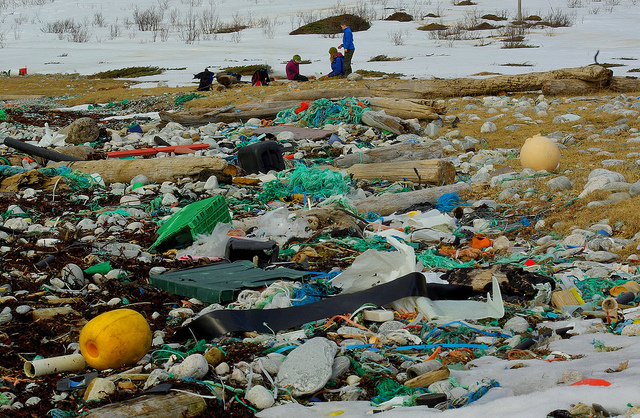
挪威北部海岸,滿是被沖刷上岸的塑膠垃圾。圖片來源:Snemann(CC BY-NC-ND 2.0)
出現在最不該出現的地方 1兆件塑膠冰封在北極
根據英國《衛報》報導,海洋塑膠垃圾是個重大環境問題,現今海洋中,共有5兆件塑膠垃圾,常被魚類、鳥類誤食,傷害全球海洋生態。
英國倫敦皇家學院海洋學家賽比利(Erik van Sebille)進一步發現,英國海域大部分的塑膠垃圾最後會漂流到北極。「洋流像輸送帶般,將英國海中的塑膠垃圾往北移。而北極可說是目前塑膠垃圾最不該去的地方。」賽比利說。
北極因為氣候變遷的關係,已經在快速暖化,冰蓋也正在融解中,一旦冰封的塑膠垃圾釋出,將帶給野生物和魚類龐大生存壓力。
過去研究發現,過去數十年,至少有1兆件的塑膠被冰封在北極冰層中,儼然成為全球塑膠垃圾的儲存槽,垃圾密度是惡名昭彰的太平洋垃圾帶的好幾倍。全球暖化之下,被冰封的塑膠垃圾逐漸釋出,讓污染問題更加嚴重。
科學家:塑膠無罪 而應謹慎思考使用方式
賽比利指出,因應海洋塑膠污染問題需要多管齊下,包括加強水處理廠的濾水設備,使之能過濾塑膠微粒和微纖維,全世界的掩埋場必須往內陸遷移,以及開發能在海中生物分解的塑膠,目前的塑膠材料只能在掩埋場分解,無法在海洋中分解。
但賽比利認為,塑膠不應被禁用:「塑膠是世界上最棒的人工材料。不需污名化塑膠,而是要謹慎地思考每一種使用方式,然後禁用某幾種,如個人清潔用品中的塑膠微粒。」

Plastic waste dumped in UK seas 'carried to Arctic within two years'
Analysis shows most UK plastic ends up in the Arctic, where it does ‘extreme harm’ to the fragile polar environment

Plastic dumped into the seas around the UK is carried to the Arctic within two years, scientists have revealed, where it does “extreme harm” to the fragile polar environment.
Marine plastic pollution is a huge problem, with 5tn pieces of plastic now floating in the world’s oceans. The plastic is frequently mistaken for food by fish and birds, causing damage to life throughout the seas.
But the fate of plastic pollution from the UK was little understood until Erik van Sebille, an oceanographer at Imperial College London, analysed the issue. “What we found, quite shockingly and unexpectedly, is that most UK plastic ends up in the Arctic. It does extreme harm there we think,” he told the Guardian.
“The ocean currents are like conveyor belts moving UK plastic very fast up north, which is the probably the worst place for plastic to be at this moment,” van Sebille said. The Arctic is already heating up very rapidly due to climate change and the ice cap is melting, putting wildlife and fish under pressure.
Previous research estimated that at least 1tn pieces of plastic had been frozen into the Arctic ice over past decades, making it a major global sink for plastic pollution, many times more concentrated than the well-known great Pacific garbage patch. With global warming expected to melt the entire ice cap eventually, that plastic would be released, making the pollution problem even worse.

“There is so much plastic in marine animals at the moment,” said van Sebille. “Almost every fish and bird that has been cut open for science, we find plastic inside it. It is really hard to find an animal that doesn’t have plastic inside it.”
There is fast-growing evidence of direct harm to animals that eat plastics, including young fish starving, oysters stopping reproduction and birds being weighed down, van Sebille said. Furthermore chemicals in the plastic or absorbed by them add to the harm, he said: “The small pieces of plastic become very potent pills, full of toxic chemicals.”
This affects the entire ecosystem, he said: “As soon as one group of animals gets impacted, then other species get impacted, either because they don’t have food anymore, or because they are eating animals which have eaten plastic, so they get it inside them too.” It is likely humans consume plastic when eating seafood too.
The new work is presented as part of the Royal Society’s summer science exhibition and used the Plastic Adrift computer tool. It showed plastic pollution reaches the Arctic from the UK in two years and then circles the pole for many years.
“One of the arguments we often hear is that it is all China’s fault and a lot of the plastic gets into the ocean from south east Asia,” said van Sebille. “But UK plastic, even though it is less than from other regions, actually has a very big impact on one of the most vulnerable ecosystems in the world.”
A study in 2015 found tiny plastic particles near the Svalbard archipelago in the Arctic circle, but its source was unknown. “We knew the plastic was there, but what we have now found is that a lot of it is from the UK and probably northwestern Europe in general,” van Sebille said.
Tackling the problem of marine plastic pollution requires action on several fronts, he said, including better filters in water treatment plants to catch microbeads and fibres from synthetic clothes. Landfill dumps around the world must also be moved away from coasts and plastics that biodegrade in the oceans need to be developed, as current versions only break down in composters, not in the sea.
But van Sebille said plastic should not be banned. “Plastic is one of the best materials ever invented.” he said. “So don’t demonise plastic, but instead really think carefully about whether is it useful in every single way we use it. Then ban specific uses of plastic, like microbeads” in toiletries and cosmetics.
The Royal Society’s summer exhibition is in London, UK, and runs until Sunday 10 July. Entry is free.


沒有留言:
張貼留言