Scientists have invented a cling film-like food wrap made from silk that can preserve fruit for more than a week, as a natural, biodegradeable alternative to plastic.
International concern has been growing about plastic waste, particularly the amount that gets into the sea. One estimate is that by 2050 there will
more plastic than fish in the world's oceans.
Now a team of biomedical engineers at Tufts University in the US have developed a technique that enables food to be coated with an almost invisible layer of fibroin, a protein found in silk, which helps make it one of nature's toughest materials.
The lead researcher, Professor Fiorenzo Omenetto, told The Independent that the world should probably move "towards processes that are more efficient and more naturally derived" and develop materials that "are closer to the things that surround us, rather than having more man-made, processed materials ... for the general well-being of our planet".
"It's a wise way of thinking about how we manage the resources of our planet, to maybe use renewable systems as opposed to non-renewable systems," he said.
"The pervasiveness of plastic and all the inorganic chemicals that leach out, albeit at very slow rates, can affect us in many ways."
When asked what the chances were that silk-derived products would replace plastics, Professor Omenetto said: "That's our dream."
However he said the use of plastic was widespread and "incredibly cost effective" so it might take some time to convince people to change.
The same team previously made a silk cup that could be used, at least once, for coffee as a possible replacement for plastic-lined cardboard cups.
The fruit is coated by dipping it in a liquid containing a tiny amount of fibroin, but the wrap could also be applied with a spray. The silk is produced naturally by worms of moths.
Strawberries left for seven days at room temperature became discoloured and went soft, but those coated with the silk protein stayed juicy and firm.
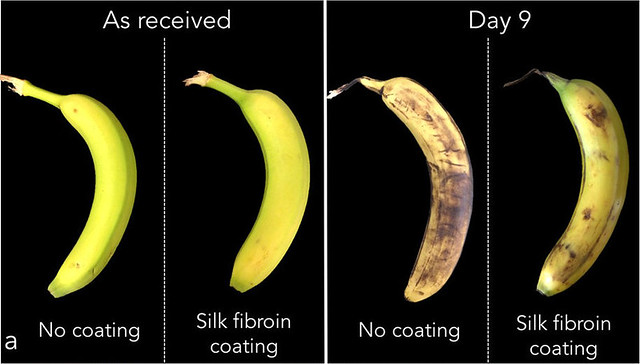
The skin of both coated and uncoated bananas became browner over nine days, but the flesh of the former remained largely white while the latter’s flesh was mostly brown. Also, a 200g weight placed on the uncoated banana sank into the flesh but did not do so when put on the coated one.
“The results suggested that silk fibroin coatings prolonged the freshness of perishable fruits by slowing fruit respiration, extending fruit firmness and preventing dehydration,” the researchers wrote in the paper.
They did not test whether the taste of the fruit was affected, but noted that silk fibroin “is generally considered flavourless and odourless, which are compelling properties for food coating and packaging applications”.
Tests were also carried out to see whether anything toxic was created during the process.
“For all the elements considered, the detection values were significantly below the toxicity levels in drinking water, as per World Health Organization guidelines,” the paper said.



沒有留言:
張貼留言