https://edition.cnn.com/2020/07/02/business/climate-change-clean-energy-iea/index.html?fbclid=IwAR31zffBX0yNz3vYifqrLZyJ_EJUagNwgT8d1KzoiNQcWdGuslERs9sA2Rk
Warning: The world won't hit climate goals unless energy innovation is rapidly accelerated




New York (CNN Business)Solar and wind power are booming. Electric vehicles are so promising that Tesla is now worth more than ExxonMobil. Coal is collapsing.
And yet energy watchdogs are warning that not nearly enough is being done to fight the climate crisis.
The International Energy Agency sounded the alarm Thursday about the "critical need" to rapidly accelerate clean energy innovation. That's because the climate goals set by governments and corporations around the world depend on technologies that have not yet reached the market.

"The message is very clear: in the absence of much faster clean energy innovation, achieving net-zero goals in 2050 will be all but impossible," Fatih Birol, the IEA's executive director, said in a statement.
Major parts of the world economy don't have clean energy options as yet. Power companies are dumping coal in favor of increasingly affordable solar and wind power. And all the major auto makers are racing to develop the best electric vehicles to compete with Tesla.
Yet there are few technologies available to bring emissions down to zero in areas such as shipping, trucking and aviation, the IEA said. The same problem exists in heavy industries like steel, cement and chemicals.
"Decarbonizing these sectors will largely require the development of new technologies that are not currently in commercial use," the report said.
And that is no slam dunk. It took decades to scale up solar panels and batteries to make them economical. And plenty of technologies failed along the way.
"Time is in even shorter supply now," the IEA report said.
'Disconnect' between goals and efforts
That's not to say progress isn't being made.
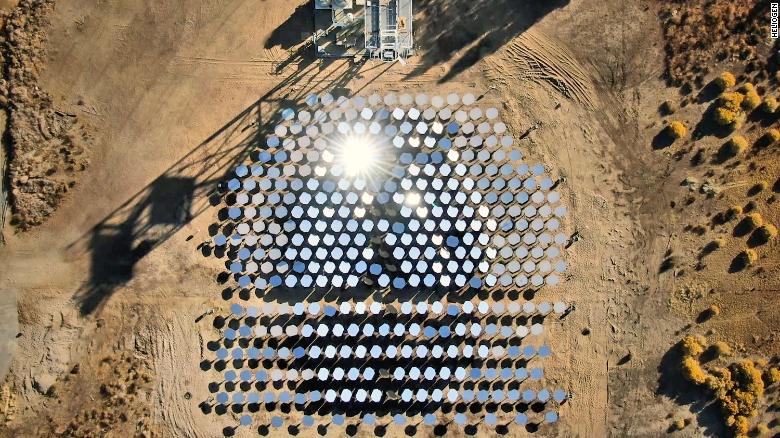
Late last year, Heliogen, a clean energy startup backed by Bill Gates, discovered a way to use artificial intelligence and a field of mirrors to generate extreme amounts of heat from the sun. The goal is to use that carbon-free sunlight to replace fossil fuels in certain heavy pollution industrial processes, such as making cement, glass and steel.
Still, the IEA said there are "no single or simple solutions to putting the world on a sustainable path to net-zero emissions."

About three-quarters of the cumulative reductions in carbon emissions to get on that path will need to come from technologies that have "not yet reached full maturity," the report said.
For instance, while battery technology has evolved significantly, the IEA said "rapid progress" is required to transition battery prototypes to the world's long-distance transportation needs.
Yet there isn't enough money being deployed by corporations or the public sector toward researching next-generation energy solutions.
"There is a disconnect between the climate goals that governments and companies have set for themselves and the efforts underway to develop better and cheaper technologies to realize those goals," the IEA's Birol said.
Pandemic deals blow to energy spending
That disconnect, like so many others now, is being amplified by the pandemic.
Although social distancing and health restrictions are causing carbon emissions to tumble, investment in energy is also falling sharply. Spending in the energy industry is expected to plunge by a record $400 billion, or 20%, this year, the IEA previously estimated.
That slowdown in spending undermines efforts to develop clean energy solutions.
At the same time, questions about the future of the economy, especially the energy and transportation sectors, will make it harder for startups to attract capital. Governments grappling with dual health and economic crises may be tempted to divert money away from developing clean energy at exactly the wrong time.
"Failure to accelerate progress now," the IEA report said, "risks pushing the transition to net-zero emissions further into the future."


沒有留言:
張貼留言