http://e-info.org.tw/node/115486
農牧業的公衛危機? 歐洲空污元凶竟是氮肥
文字大小
156 1 Share1
本報2016年5月20日綜合外電報導,姜唯編譯;蔡麗伶審校
空氣污染來自哪裡?最新研究顯示,歐洲最大單一空氣污染源竟是農業。原因是農業肥料和牲畜廢棄物釋出的氮化物,會飄散至工業區,與工業區釋出的污染源結合,形成黏著在肺部組織的固態顆粒,引起呼吸困難,損害心肺功能,最終導致過早死亡。
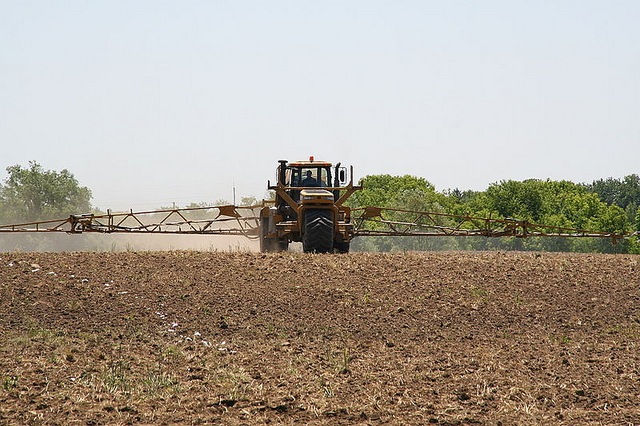
農業施用氮肥逸散到空氣中形成污染源,影響面積相當廣泛。圖片來源:eutrophication&hypoxia(CC BY 2.0)。
農業氮肥逸散 氨氣成主要空氣污染源
釋出氮化物的含氮肥料已經廣泛使用數十年。氮是空氣的主要成分,也是促進植物生長的重要元素,但是大量使用的後過,造成過多的氮進入土壤。氮和氫組成的氨(NH3),就是施肥土壤和動物廢棄物的副產物。
學界已逐步確立懸浮微粒空氣污染和農業釋出的氨之間的關係,越來越多研究顯示,氨是主要的空氣污染源。
當空氣中的氨飄散至工業區,與燃燒產生的污染物、柴油車輛產生的氮氧化物、發電廠和其他工業流程產生的硫化物結合在一起產生直徑2.5微米的微小顆粒。這些微小的粒子會隨著呼吸進入人體肺部,不只引起兒童與長者為主的呼吸疾病,更能造成心臟病。
根據哥倫比亞大學地球研究所的最新研究,歐洲、美國大部分地區、俄羅斯和中國都深受空氣污染之苦。在英國,空氣污染每年造成4萬人過早死亡,當地國會議員認為,空氣污染已經成為公衛危機。
農業污染管理難 排入海洋釀生態危機
雖然英國國會議員提出補救措施,例如以汽油車取代柴油車、將污染最嚴重的車輛移出城市等,農業造成的空氣污染卻被忽略。部分原因是農業空氣污染影響範圍太大,甚至跨越國境,相當棘手。
呼籲農夫使用含氮較少的肥料是一個辦法,但不足以解決問題。哥倫比亞大學大氣科學家鮑爾(Susanne Bauer)說:「我們並非反對使用肥料,非洲等許多地區需要更多的氮肥。我們認為隨著人口成長,生產食物量越多,需要的肥料也越多。」
鮑爾認為,控制將農業污染源變成有害物質的工業污染源是目前最重要的任務,包括減少燃煤電廠以及其硫化物排放,使用更有效率的車輛甚至電動車,更嚴格地管理工業污染等。
不過,其他微小粒子也會和氨結合,包括沙塵。兩年前,撒哈拉沙漠的沙塵就曾造成英國嚴重空氣污染。
過多的肥料也是海洋主要污染源之一。農業廢水逕流進入海洋中形成「死亡區域」,裡面幾乎無氧,沒有海洋生物能生存。進入空氣或海洋的肥料不再具有幫助作物生長的功能,因此若要求農人使用較少的肥料,但提高使用肥料的效率,有機會減少進入空氣和海洋的肥料。

Farming is 'single biggest cause' of worst air pollution in Europe
Nitrogen compounds from fertilisers and animal waste drifting over industrial regions is combining to form fine particulate pollution, report finds

Farming is the biggest single cause of the worst air pollution in Europe, a new study has found, as nitrogen compounds from fertilisers and animal waste drift over industrial regions.
When the nitrogen compounds are mixed with air already polluted from industry, they combine to form solid particles that can stick in the fine lung tissue of children and adults, causing breathing difficulties, impaired lungs and heart function, and eventually even premature death.
The compounds come from nitrogen-rich fertilisers, which have been in common use for decades. Nitrogen, the major content of the air we breathe, is essential for plant growth, and enhancing that growth has led to a massive industry in putting nitrogen - already naturally present in soils - back into the ground in greater quantities.
Ammonia, whose chemical composition is nitrogen and hydrogen (NH3), is a byproduct both of fertilised fields and of animal waste, as it can come from the breakdown of livestock excretions.
Links between fine particulate pollution and ammonia from agricultural sources have been slow to be firmly established, but an increasing body of research suggests that this is now a leading source of air pollution.
Europe, much of the US, Russia and China have been found to suffer from the problem, in the latest research from the Earth Institute at Columbia University, in the US, published in the journal Geophysical Research Letters.
When ammonia in the atmosphere reaches areas of industry, the pollutants from combustion, which include nitrogen oxides produced by diesel vehicles, and sulphur compounds from power plants and some other industrial processes, the chemicals combine to create very small particles, about 2.5 micrometres across.
Although invisible to human eyes, their tiny size means these particles penetrate deep into people’s lungs when they are breathed in. Not only can they cause breathing problems, particularly in the young, the elderly and people more vulnerable, but they can even cause heart disease.
More than 40,000 people a year have been found to die prematurely in the UK alone because of air pollution, prompting MPs to declare the problem a “public health emergency”.
But while MPs have called for remedies such as scrapping diesel cars in favour of petrol models, and excluding the most polluting vehicles from large parts of cities, the problem of how to control pollution from agriculture has been left largely alone.
That is partly because such diffuse pollution - which by its nature travels easily across long distances and international borders - is so hard to deal with.
Counselling farmers to use less fertiliser is one way, but it will not solve the problem. Susanne Bauer, an atmospheric scientist at Columbia, said: “This is not against fertiliser. There are many places, including Africa, that need more of it. We expect population to go up, and to produce more food, we will need more fertiliser.”
She said that controlling other sources of industrial pollution, which are the agents that turn agricultural pollution into its harmful forms, should be the priority. Cutting down on coal-fired power stations and their sulphur emissions, using more efficient vehicles and potentially electric cars, and regulating polluting industries more tightly would all have an effect, she suggested.
However, other tiny particulates can also combine with ammonia, including dust such as the Saharan desert sands that contributed to a major pollution event in the UK two years ago.
Excess fertiliser use is also one of the biggest causes of pollution in the oceans, as run-off creates “dead zones” in the seas where oxygen is virtually eliminated and fish and other marine life can no longer exist. The fertiliser that runs off or reaches the air is no longer helping the crops it was intended to grow, so if farmers were forced or encouraged to use less fertiliser, but use it more efficiently, the amounts that find their way into the seas and air might be reduced.


沒有留言:
張貼留言