https://www.forbes.com/sites/energyinnovation/2020/01/21/renewable-energy-prices-hit-record-lows-how-can-utilities-benefit-from-unstoppable-solar-and-wind/?fbclid=IwAR3JE5sjD3nbhOjCe1kSFgA_OjdlDoiaCT2uMYrEEh45f-UhQj2Nx1BF2TQ#7babee4d2c84
Renewable Energy Prices Hit Record Lows: How Can Utilities Benefit From Unstoppable Solar And Wind?


New U.S. Energy Information Administration (EIA) data predict solar and wind energy will dominate America’s new generation in 2020, making up 76% of new generation and adding 42 gigawatts (GW) of zero emission capacity, while coal and natural gas will dominate 2020 retirements with 85% of plant closures.
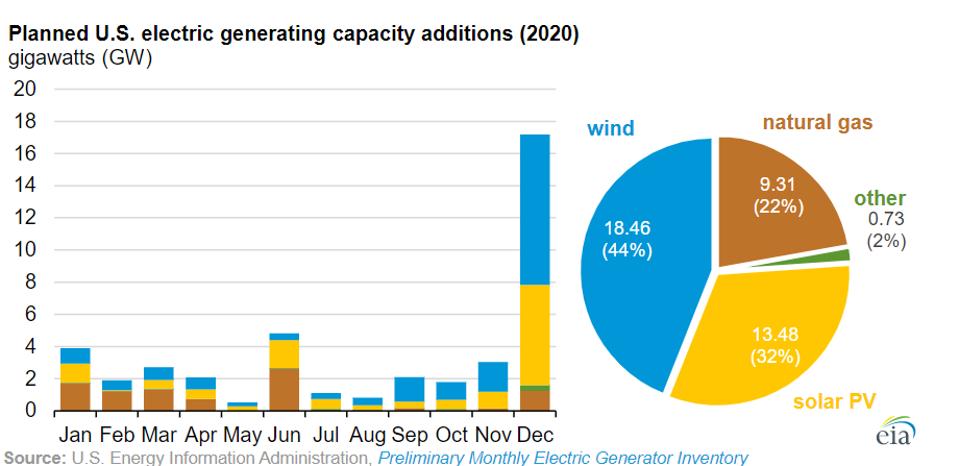
EIA reports U.S. electricity generation from renewable energy exceeded coal for the first time in April 2019, and forecasts coal generation will decline 13% in 2020. EIA also projects natural gas generation will only grow 1.3% in 2020 – the slowest rate since 2017 – while non-hydropower renewable energy generation will grow 15% in 2020 – the fastest rate in four years.
New U.S. renewable energy investment rose 28% to a record $55.5 billion in 2019 despite pro-fossil fuel Trump administration efforts, U.S. solar installations could hit a record 19 gigawatts (GW) in 2020 despite federal tax incentives phasing out, and grid regulators estimate 330 GW of wind and solar will come online by 2029.
So, is renewable energy now unstoppable? If the question is determined by economics, the answer may be yes.
And if renewable energy is now unstoppable, what does that mean for the utilities engaged in the power sector transformation from fossil to clean energy? If the question is determined by smart utility policy design, the answer may be economic opportunity.
Today In: Business
Renewable energy prices fell to record lows in 2019
Lazard’s most recent Levelized Cost of Energy (LCOE) analysis shows U.S. renewable energy prices continued falling fast in 2019, with wind and solar hitting new lows, after renewables fell below the cost of coal in 2018. LCOE measures the total cost of building and operating a facility over its lifetime, and shows renewables beating fossil fuels by ever-larger margins – even without subsidies – with that trend forecast to continue for decades to come.

Over the last decade, wind energy prices have fallen 70% and solar photovoltaics have fallen 89% on average, according to Lazard's 2019 report. Utility-scale renewable energy prices are now significantly below those for coal and gas generation, and they're less than half the cost of nuclear. The latest numbers again confirm that building new clean energy generation is cheaper than running existing coal plants.
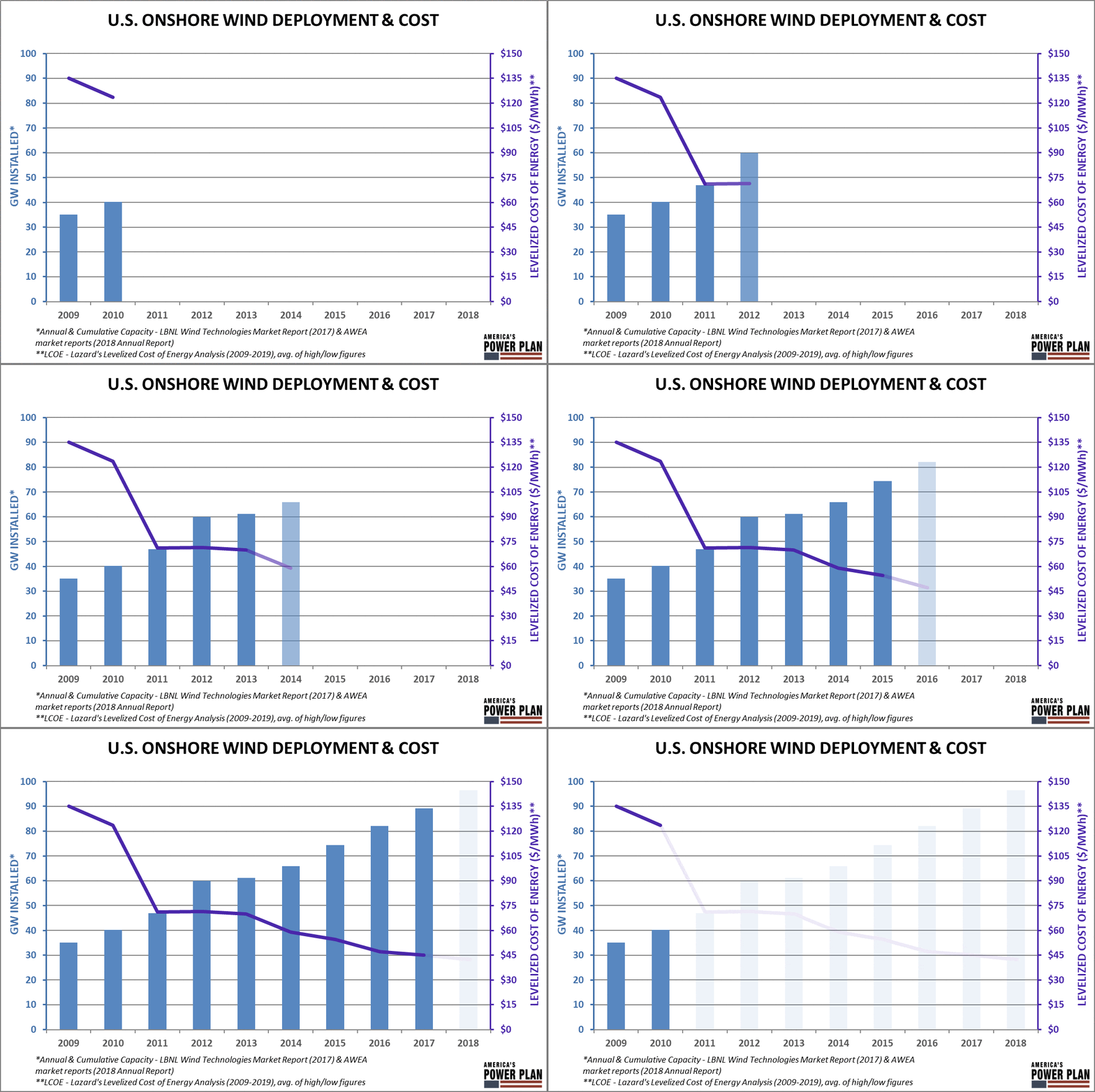
In other words, it is now cheaper to save the climate than to destroy it. Capacity installation trends reflect this economic reality, with new wind and solar generation coming online at a breakneck pace. Wind power capacity in the U.S. has more than doubled since 2010 and reached nearly 100 GW in 2018.
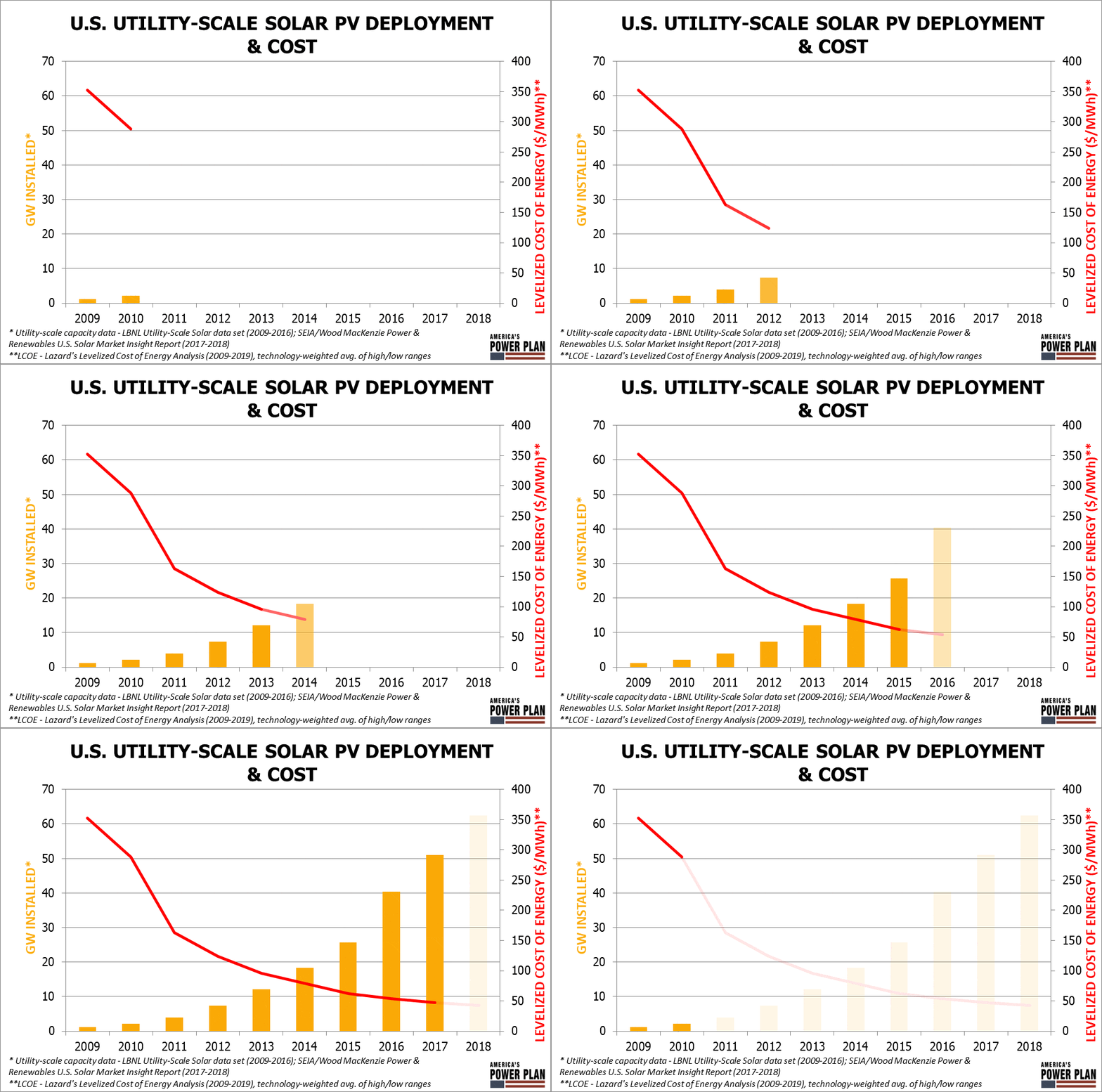
Utility-scale solar capacity grew by a factor of more than 30 over the same time period to more than 60 GW, and is expected to more than double over the next five years.
In Lazard's LCOE analysis, unsubsidized wind power and utility-scale solar come in at lower price ranges than any other analyzed resource including gas, coal, and nuclear. Unsubsidized wind ranges from $28–$54 per megawatt hour (MWh), and unsubsidized utility-scale solar ranges from $32–$42/MWh. Factoring in subsidies, wind prices plunge to $11–$45/MWh and utility-scale solar prices stay relatively stable at $31–$40/MWh.

Unsubsidized clean energy ranges are lower than nuclear at $118–$192/MWh, coal at $66–$152/MWh and gas combined cycle at $44–$68/MWh. Even considering these figures apply only to new generation capacity, looking at the marginal costs to run existing coal or nuclear—$26–$41/MWh and $27–$31/MWh respectively, shows building new renewable energy remains competitive with running existing generation.
As renewable energy prices keep falling, states set higher installation goals
Renewable energy prices are expected to continue declining, with prices falling even farther over the next three decades, according to the National Renewable Energy Laboratory’s (NREL) 2019 Annual Technology Baseline. NREL predicts the LCOE of wind technologies will decline at least another 64% by 2050 in its optimistic scenario and at least 44% in its mid-level scenario. In those same scenarios, solar’s LCOE falls by 74% and 47% by 2050.
Fossil fuel proponents often point out that focusing on LCOE doesn’t account for grid reliability concerns or financial liability imposed by closing coal plants ahead of schedule. That is true—but it’s also true that LCOE doesn’t account for the climate change risks and health costs of continuing to pour carbon dioxide and other greenhouse gases into the air.
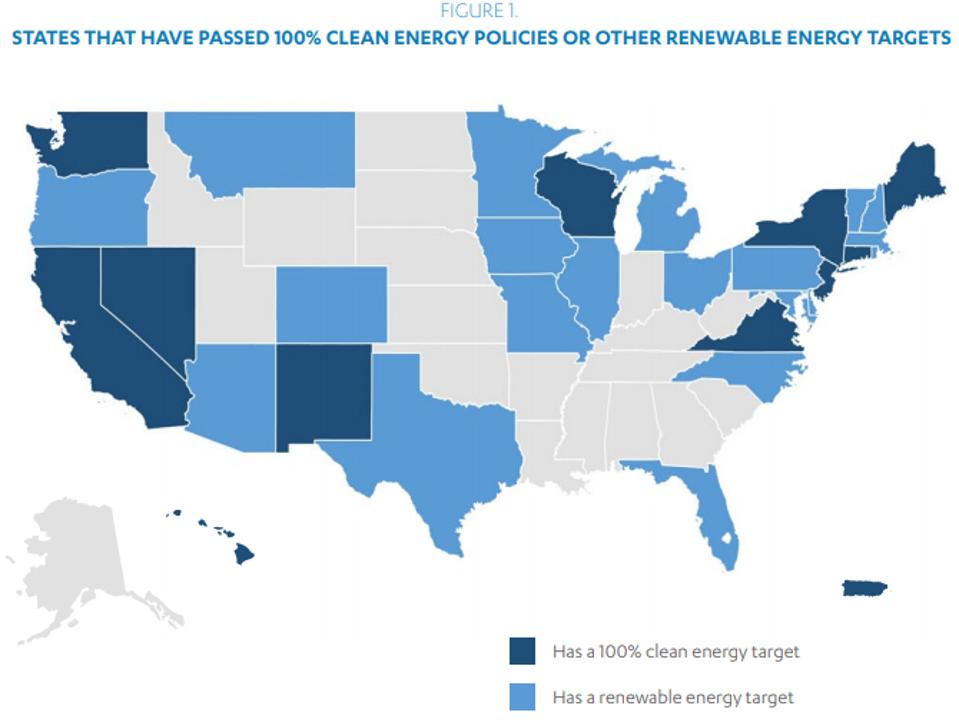
Thirty-seven states have recognized these full effects, conceptually if not explicitly, through renewable portfolio standards or renewable portfolio goals that diversity their electricity supply and promote economic development. A growing number of jurisdictions have set even more ambitious targets as prices have fallen with 11 states, Puerto Rico, and the District of Columbia committed to 100% clean electricity.
The bottom line: Renewables are now cheaper than the average cost to operate coal and average cost to build new natural gas. Plunging clean energy prices have been made possible by both R&D and the economic "learning curve" concept: As more of a technology is deployed, it becomes cheaper and more efficient.
Add it all up, and this trend isn’t going away anytime soon. Utilities can capitalize on this trend while reducing emissions, but policy helping manage the financial transition is key to encouraging a smooth and rapid transition.
Opportunities for utilities with the right policy support
Some utilities have embraced the transition to clean energy, while others are still running uneconomic coal plants and building new natural gas. But as energy economics and state targets shift from fossil fuel to clean energy, the utilities that stick with a business-as-usual approach do so at their own peril, increasing the risk of expensive stranded assets and higher consumer electricity prices.
Instead, utilities could replace fossil fuel plants with new renewables in a “steel for fuel” approach, increasing equity earnings by moving capital from uneconomic fossil power plants relying on significant fuel expenditures to plants that run on free fuel – solar and wind. The operating cost savings of this approach can be substantial, turning unproductive capital into productive, clean generating assets.
To further accelerate this transition, regulators can focus on complementary policies in wholesale power markets that place these cheap and clean generation resources on an equal footing with traditional fossil sources. Wholesale power markets were designed around a system where large centralized plants supplied inflexible consumer demand, but that paradigm is shifting as carbon-free resources displace fossil fuel generation.

Wholesale market reform can help utilities take advantage of abundant cheap and clean resources by including technology-neutral, market-based procurement along with performance-based regulation, which shifts utility focus away from capital investment toward delivering value for customers. Finally, regulators and utilities should promote demand response, boost transmission capacity, and upgrade distribution infrastructure, among other complementary electricity policies, to accommodate the influx of renewables.
In Colorado, for example, effective utility regulation has driven a surge of low-cost bids for wind and solar projects. And in Hawaii, the legal separation of revenue from capital expenditures is an example of performance-based regulation that will help the state achieve its 100% renewable energy target.
Renewable energy’s economic opportunity is too big to pass up
As renewable energy prices keep falling while clean energy targets keep rising, policymakers must consider forward-looking utility and power market regulations to reach their decarbonization goals while helping utilities capitalize on the clean energy transition. With prices for wind and solar at all-time lows, the opportunity is too big to pass up.
We are a nonpartisan climate policy think tank delivering high-quality research and original analysis to help policymakers make informed energy policy choices. We accel
...
Silvio is communications director at Energy Innovation, where he leads all media relations and communications efforts.
沒有留言:
張貼留言