http://e-info.org.tw/node/117061
每年5兆根菸屁股亂丟 重金屬污染恐進入食物鏈
文字大小
743 1 Share1

本報2016年7月14日綜合外電報導,姜唯編譯;蔡麗伶審校
菸屁股是海洋中最常見的垃圾,每年約有5兆根丟棄在戶外。根據英國菸害防制期刊《Tobacco Control》的最新研究,隨地亂丟的菸屁股中所含的金屬污染物可能污染海洋,甚至進入食物鏈。
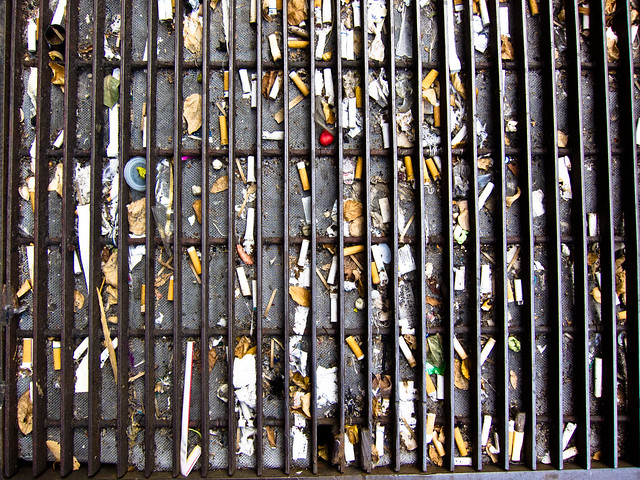
亂丟菸蒂可能造成意想不到的環境傷害。圖片來源:Susan Sermoneta(CC BY-NC-ND 2.0)。
過去已有研究指出,菸屁股會釋出金屬物質。去(2015)年夏天,研究人員在波斯灣的布希爾(Bushehr)海港北部沿岸九處地點,測量潮線間深度十公分的沈積物中,菸屁股金屬物質的含量,包括鎘(Cd)、鐵(Fe)、砷(As)、鎳(Ni)、銅(Cu)、鋅(Zn)和錳(Mn)。
研究測了兩次,間隔十天,以檢驗海流對金屬含量的影響。各種金屬物質含量差異相當大,鐵含量79.01 ug/g至244.97 ug/g,錳含量38.29~123.1 ug/g,砷0.12 ug/g~0.48 ug/g。不過在這九個地點,兩次測量的水準都差不多。
研究人員指出,金屬含量很可能和菸草種植的方式、殺蟲劑和殺草劑的使用、香菸製造的過程、捲菸紙是否加入漂白劑等因素有關。
香菸濾嘴是用醋酸纖維素製成,到了海裡會和其他塑膠一樣,變成其他金屬物質的載體。
研究人員進一步指出,動植物對金屬的反應差異很大:「水和土壤中的重金屬和微量金屬對部分物種不利,但也可能增加部分物種的耐受程度。」
「每年被丟棄的菸屁股約有4.95兆根,其中的金屬物質進入海洋後,可能直接傷害當地物種,甚至進入食物鏈。」
研究人員也強調,菸屁股金屬物質對海洋環境的影響還需要更多研究來探討。但研究人員認為,「加強菸屁股影響海洋與海岸環境的公眾意識,應有助於減少菸屁股對環境的傷害。」
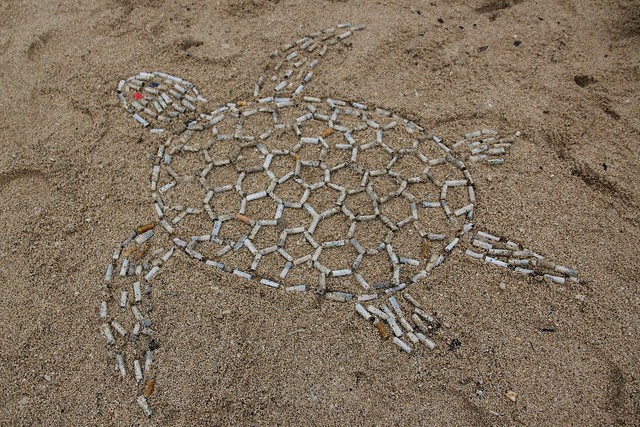
淨灘可撿到不少煙蒂,足以排成一隻海龜。圖片來源:本報資料照。
【延伸閱讀】
【相關文章】
【參考資料】
- Science Daily(2016年7月7日),Metals from cigarette butts may pose potential threat to marine environment
Metals from cigarette butts may pose potential threat to marine environment
Almost 5 trillion butts littered annually; contaminants may enter food chain
- July 7, 2016
- BMJ
- Littered cigarette butts may be an important source of metal contaminants leaching into the marine environment and potentially entering the food chain, suggests new research.
FULL STORY

Fisherman smoking. Cigarette filters, which are made of cellulose acetate, may act like other plastics in providing a conduit to transport metals in marine environments, researchers suggest. (stock image)
Credit: © Wollwerth Imagery / Fotolia
Littered cigarette butts may be an important source of metal contaminants leaching into the marine environment and potentially entering the food chain, suggests research published online in the journal Tobacco Control.
Cigarette butts are the most common form of litter found in the marine environment, with an estimated 5 trillion or so discarded outdoors around the globe every year. Previous research has also suggested that metals can leach from cigarette butts.
To gain an understanding of the potential implications, levels of metals in cigarette butts were monitored at nine different locations along the north part of the Persian Gulf in the Bushehr seaport coastal areas during the summer of 2015.
The metals assessed included cadmium (Cd), iron (Fe), arsenic (As) nickel (Ni), copper (Cu), zinc (Zn) and manganese (Mn) from discarded cigarette butts in the top 10 cm of sediment and deposited at the tidal mark on the beaches.
The metal content was measured twice, with a period of 10 days in between, to gauge the potential impact of marine currents on levels.
The levels of each of the metals varied considerably: from 79.01 ug/g to 244.97 ug/g for iron and 38.29 to 123.1 ug/g for manganese, for example. Arsenic levels varied from 0.12 ug/g to 0.48 ug/g.
But there was little significant change in levels between the two assessments, irrespective of where the samples had been taken.
Metal content is likely to vary according to the cultivation and growth of the tobacco leaf and the application of pesticides and weed killers. Additional metals may be added during cigarette manufacture and/or during the application of brightening agents on the wrapping paper, say the researchers.
Cigarette filters, which are made of cellulose acetate, may act like other plastics in providing a conduit to transport metals in marine environments, they suggest.
The response of animal and plant life to metal content is highly variable, they point out. "Whereas elevated concentration of heavy and trace metals in water and soils can adversely affect some species, contamination may increase the metal tolerance of other organisms," they write.
"Considering the estimated amount of cigarette butts littered annually (4.95 trillion), the release of metals from littered cigarette butts in the marine environment may increase the potential for acute harm to local species and may enter the food chain," they suggest.
But more research is needed to understand fully the leaching behaviour of metals from cigarette butts into the marine environment, they emphasise.
But in the meantime, they conclude: "Enhanced public awareness about the toxicity of discarded cigarette butts in the marine and coastline areas may help to decrease the environmental hazards of cigarette butts in these areas."
Story Source:
Journal Reference:
- Sina Dobaradaran, Iraj Nabipour, Reza Saeedi, Afshin Ostovar, Maryam Khorsand, Nahid Khajeahmadi, Reza Hayati, Mozhgan Keshtkar.Association of metals (Cd, Fe, As, Ni, Cu, Zn and Mn) with cigarette butts in northern part of the Persian Gulf. Tobacco Control, 2016; tobaccocontrol-2016-052931 DOI:10.1136/tobaccocontrol-2016-052931
Cite This Page:
BMJ. "Metals from cigarette butts may pose potential threat to marine environment: Almost 5 trillion butts littered annually; contaminants may enter food chain." ScienceDaily. ScienceDaily, 7 July 2016. .
沒有留言:
張貼留言