http://e-info.org.tw/node/116231
空污成心理健康殺手 研究:兒童受害最深
文字大小
48 2 Share1
本報2016年6月16日綜合外電報導,姜唯編譯;蔡麗伶審校
瑞典的空氣品質並不差,但科學家卻發現,當地空氣污染程度只要小幅增加,就會伴隨著兒童心理疾病醫療紀錄的顯著增加。這也是學界首次發現兩者的相關性。
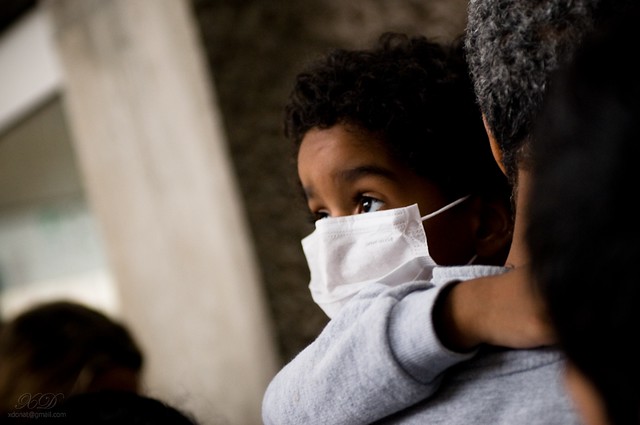
研究發現空氣污染會影響小兒心理健康。圖片來源:Xavier Donat(CC BY-NC-ND 2.0)。
兒童心理健康 低度空污也影響
這份發表於同儕審核醫學期刊《BMJ Open》的研究,檢視超過50萬名瑞典兒童暴露於空氣污染的情況,並和鎮定劑與抗精神病藥物等心理疾病用藥紀錄作比較,發現空氣污染和兒童心理疾病發生率有關,即使是低度的污染也可看出「效果」。
研究人員發現,每立方公尺增加10微克的二氧化氮,兒童心理疾病就增加9%;每立方公尺增加10微克的懸浮微粒(PM2.5和PM10),兒童心理疾病增加4%。
這是學界首次發現兩者相關性,但已有越來越多例證顯示空氣污染會影響心理與認知健康,而且兒童特別容易受影響。過去許多研究也發現,空氣污染和兒童自閉症譜系障礙和學習發展有關。
都市空污年年惡化 心理健康成隱憂
歐盟和世界衛生組織對二氧化氮的容許標準是每立方公尺40微克,但研究人員發現,儘管在每立方公尺15微克的空氣污染環境,仍可觀察到與兒童心理疾病的相關性。
更何況在倫敦等都市,空氣污染程度可能是世衛容許標準的好幾倍。今年5月,英國衛報揭露一份未公開的空氣污染報告。報告中指出,倫敦有433所學校位於二氧化氮污染超過歐盟標準的地區,其中有4/5位於貧困地區。
雖然無法直接從這個研究推論,空氣污染程度較高時,兒童心理疾病發生率會如何變化,但研究主持人、瑞典于默奧大學(Umeå University)學者奧丁(Anna Oudin)認為應該會增加。「從所有我參與過的空氣污染研究看來,效果似乎是線性的。」奧丁說。
這類研究無法建立空氣污染和心理疾患增加之間的因果關係,但點出可能的機制。「空氣污染會進入人體和大腦,造成發炎。動物研究顯示,炎症和許多心理疾患有關。」奧丁說。
今年5月,世界衛生組織發表報告指出,全世界都市的空氣污染以驚人速度惡化。去年9月的報告也指出,全世界每年有300萬人因為空氣污染而過早死亡。

Air pollution linked to increased mental illness in children
New research is first to establish the link and builds on other evidence that children are particularly vulnerable to even low levels of pollution

A major new study has linked air pollution to increased mental illness in children, even at low levels of pollution.
The new research found that relatively small increases in air pollution were associated with a significant increase in treated psychiatric problems. It is the first study to establish the link but is consistent with a growing body of evidence that air pollution can affect mental and cognitive health and that children are particularly vulnerable to poor air quality.
The research, published in the peer-reviewed journal BMJ Open, examined the pollution exposure of more than 500,000 under-18s in Sweden and compared this with records of medicines prescribed for mental illnesses, ranging from sedatives to anti-psychotics.
“The results can mean that a lower concentration of air pollution, first and foremost from traffic, may reduce psychiatric disorders in children and adolescents,” said Anna Oudin, at Umeå University, who led the study. “I would be worried myself if I lived in an area with high air pollution.”
Prof Frank Kelly, at King’s College London, said the research was important. “This builds on existing evidence that children are particularly sensitive to poor air quality probably because their lifestyles increase the dose of air pollution they are exposed too - ie they are more active - and that developing organs may be more vulnerable until they fully mature.”
Air pollution in the UK is above legal limits in many cities and estimated to cause 40,000 early deaths a year, though this only includes illnesses such as lung disease, heart attacks and strokes.
The EU and WHO limit for nitrogen dioxide (NO2) is 40mcg/m3 (micrograms per cubic metre), but levels can reach many times that in polluted cities like London. The researchers found that a 10mcg/m3 increase in NO2 corresponded to a 9% increase in mental illness in the children. For the same increase in tiny particulate matter (PM2.5 and PM10), the increase was 4%.
One striking aspect of the new research is thatSweden has low levels of air pollution, but the researchers still saw the link even below levels of 15mcg/m3. “Sweden is not a country that suffers from very bad air quality, said Kelly. “This suggests that other countries and cities have an even bigger challenge, as they will have to make significant improvements to their air quality so that it is even cleaner than Sweden’s.”
It is not possible to say from this study what would happen to rates of mental illness at higher levels of air pollution, but Oudin said they could rise: “In all the air pollution studies I have been involved in, the effects seem to be linear.”
This type of research cannot prove a causal link between the air pollution and increases in mental illness, but there is a plausible mechanism. “We know air pollution can get into bodies and brains and cause inflammation,” said Oudin. Animal studies indicate that inflammation is associated with a range of psychiatric disorders.
There have also been several earlier studies that found associations between air pollution and autism spectrum disorders and learning and development in children. “This study adds to evidence that air pollution may have detrimental effects on the brains of children and adolescents,” the Swedish researchers said.
In May, the Guardian revealed an unpublished air pollution report that demonstrated that 433 schools in London are located in areas that exceed EU limits for NO2 pollution and that four-fifths of those are in deprived areas. In May, a WHO report concluded that air pollution was rising at an “alarming rate”in the world’s cities, while a report in September found 3 million people a year suffer early deaths around the world from air pollution.
The new Swedish paper concludes: “The severe impact of child and adolescent mental health problems on society, together with the plausible and preventable association of exposure to air pollution, deserves special attention.”
沒有留言:
張貼留言