http://e-info.org.tw/node/116158
體重僅100克 迷你鳥破紀錄 遷徙里程可繞地球兩圈
文字大小
91 1 Share1

本報2016年6月15日綜合外電報導,吳郁娟編譯;蔡麗伶審校
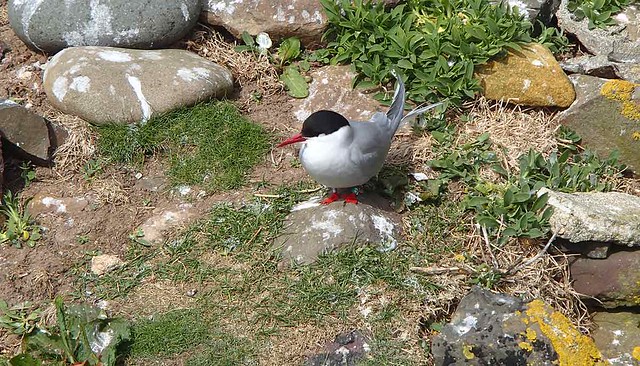
科學家最近依據腳環紀錄發現,打破世界最長遷徙紀錄的,竟是一隻外型迷你,比一瓶養樂多重不了多少的小小鳥。這隻體型瘦小,僅100公克重的北極燕鷗(Sterna paradisaea)從英格蘭東北方的Frane島出發,經大西洋飛往南極洲並返程,遷徙里程達5萬9650公里,比繞地球兩圈的距離還長。
研究人員為北極燕鷗(Sterna paradisaea)掛上腳環。圖片來源:Faculty of Science, Agriculture and Engineering/Newcastle University。
腳環是「行車紀錄器」 創下最長遷徙紀錄
這隻燕鷗去年7月飛離出生地,飛經西非海岸,繞過好望角往印度洋方向飛行,11月抵達南極洲。這段長途跋涉的旅程,全記錄在小小的腳環上。紀錄裝置繫在燕鷗腿部,僅0.7克,不影響其飛行。
英國新堡大學(Newcastle Unuversity)追蹤團隊成員貝萬(Richard Bevan)表示,「當你想到這隻瘦小的燕鷗歷經了這麼長距離的飛行與沿途的生存奮戰,並且成功返回出發地,這真的相當震撼!」
這種鳥類在長途飛行中,靠著從海面捕食魚類等食物活下來。「他們幾乎都在全速前進,持續移動,不斷振翅飛翔。這是非常驚人且充滿能量的生活型態。」
如同所有遷徙性動物,鳥類飛行是為了尋找特定季節的食物,而北極燕鷗是遷徙距離最遠的鳥類,斑尾塍鷸則從北極直飛紐西蘭,連續八天不停亦不覓食;鯨魚是遷移最遠的哺乳類動物,棱皮龜和部分蜻蜓的移動距離也超過9321公里。
氣候變遷影響 北極燕鷗逐漸減少
Farne島目前有2000對以上的北極燕鷗繁殖,捕食海裡的沙鰻。這種燕鷗的數量尚未受到全球性威脅,但數量正在下降。
目前,北極燕鷗在英格蘭Shetlands島和較遠Hebrides島的雛鳥群低於正常數量,可能是氣候變遷使海水暖化,使得沙鰻往北方移動。「燕鷗對於海洋環境改變非常敏感,他們就像是海上的金絲雀。」 貝萬表示。
科學家在29隻北極燕鷗繫上腳環,目前有20隻已返回英格蘭。其餘可能已經死亡或未返回英國繁殖。「這些追蹤資料可提供未來分析,可令我們更了解北極燕鷗如何組織牠們的遷徙和氣候變遷如何影響他們的路線。」
北極燕鷗的壽命約15到30年,代表他們一生可能飛行300萬公里,相當於來回月球四次的距離。
「我們對這種鳥的飛行能力僅有皮毛般的認識罷了。」貝萬說。
北極燕鷗的壽命約15到30年,代表他們一生可能飛行300萬公里,相當於來回月球四次的距離。圖片來源:Faculty of Science, Agriculture and Engineering/Newcastle University。

Arctic tern makes longest ever migration – equal to flying twice around the planet
Tiny bird flies 59,650 miles from its breeding grounds in Farne Islands in the UK to Antarctica and back again, clocking the longest ever migration recorded

A tiny bird from the Farne Islands off Northumberland has clocked up the longest migration ever recorded. The Arctic tern’s meandering journey to Antarctica and back saw it clock up 59,650 miles, more than twice the circumference of the planet.
The bird, which weighs just 100g, left its breeding grounds last July and flew down the west coast of Africa, rounded the Cape of Good Hope into the Indian Ocean and arrived in Antarctica in November. Its mammoth trek was recorded by a tiny device attached to its leg, weighing 0.7g - too light to affect its flight.
“It’s really quite humbling to see these tiny birds return when you consider the huge distances they’ve had to travel and how they’ve battled to survive,” said Richard Bevan at Newcastle University and part of the tracking team.
The birds survive the vast journey by dipping down to the sea surface to catch fish and other food as they travel. “They live in the fast lane all the time, constantly on the move,” said Bevan. “They have to flap all the time. It is an incredibly energetic lifestyle.”
Like all migratory animals, the birds travel to take advantage of food that is available in particular seasons. Arctic terns perform the longest migrations but another bird, the bar-tailed godwit, completes its marathon from the Arctic to New Zealand in eight days straight, without stopping to feed. Whales undertake the longest mammal migrations and leatherback turtles and some dragonflies also travel over 9,321 miles.
More than 2,000 pairs of Arctic terns breed on the Farne Islands, where they feed on sand eels in the sea. The terns are not globally threatened but are thought to be declining in number.
Colonies in the Shetlands and Outer Hebrides have been producing far fewer chicks than normal, possibly because the sand eels are moving northwards as climate change warms the oceans. “Terns are incredibly sensitive to changes in the marine environment,” said Bevan. “They are the classic canary of the seas.”
Scientists attached tags to 29 birds and 20 are known to have returned. Some may have died or it may be that the terns do not return every year to the UK to breed. “Further analysis of the data from these trackers will allow us to get a better understanding of how the Arctic terns organise their migration and how global climate change may affect their routes,” said Bevan.
Arctic terns can live for 15 to 30 years, meaning the the record-breaking tern could fly as far as 3m kilometres over its lifetime, the rough equivalent of four round trips to the moon. “We are just scratching the surface about this birds and its capabilities,” said Bevan.
The study was partly funded by the BBC programme Springwatch, which will feature the Arctic tern migration on Tuesday 7 June.







沒有留言:
張貼留言